
SRPE Water Pipe
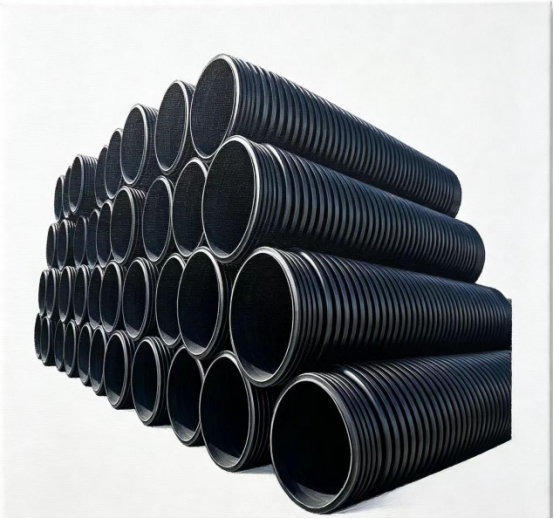
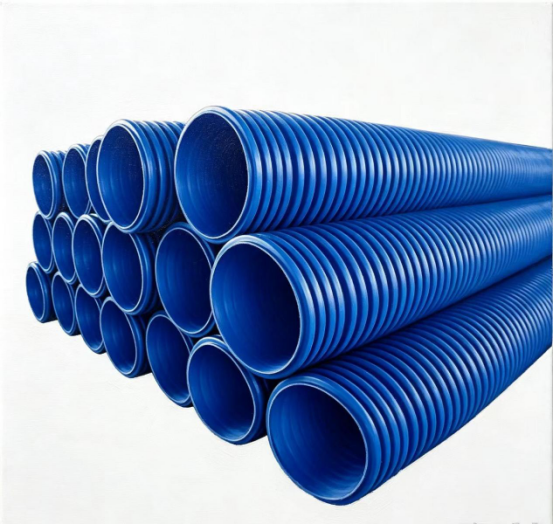
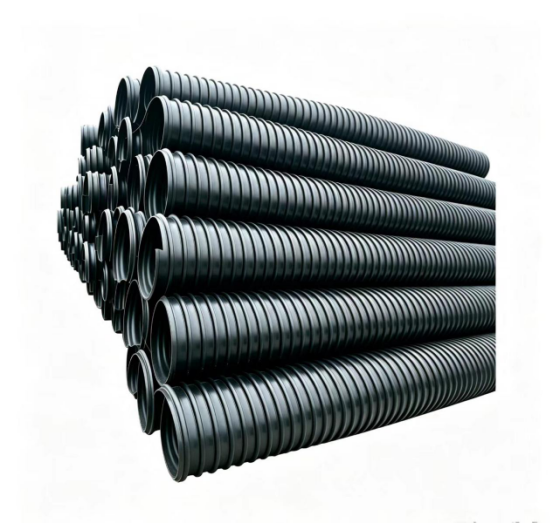
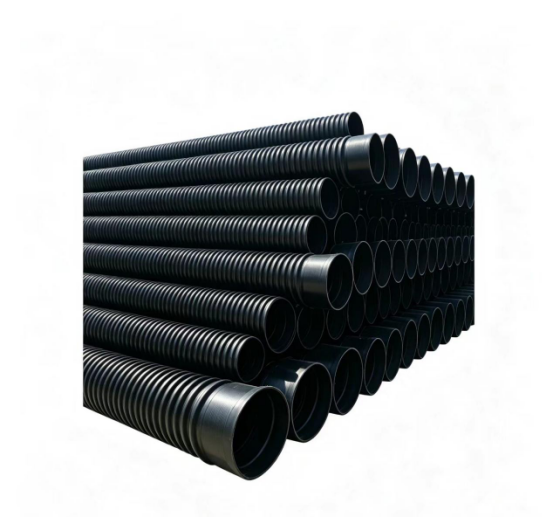
HDPE reinforced spirally wound pipe
- Product details
- Contact us
Product Introduction
The core of HDPE reinforced spirally wound pipes lies in the combination of "spiral winding" and "structural reinforcement." Key design features include a smooth inner wall, which minimizes flow resistance and enhances drainage capacity while preventing the accumulation of scale or sediment. The outer wall—or the wall structure itself—incorporates reinforcing elements, such as M-shaped ribs, dual high-profile ribs, internal ribs, multi-rib configurations, trapezoidal ribs, or hollow reinforcing ribs, all of which serve to increase the pipe's ring stiffness and compressive strength. These pipes are typically manufactured by spirally winding and fusion-welding HDPE profiles or structural strips, resulting in excellent structural integrity. As flexible conduits, they possess a degree of pliability, allowing them to adapt to complex geological conditions, such as soft soil foundations or minor differential settlement. Furthermore, the reinforced outer structure and larger external surface area facilitate effective load-sharing between the backfill material and the pipe, thereby enhancing its load-bearing capacity when buried. Product Features
Ring Stiffness: Typically reaches SN8, SN12.5, or SN16; reinforced versions can achieve even higher ratings. Corrosion Resistance: Exhibits excellent resistance to acids, alkalis, salts, and most types of sewage/wastewater. Impact Resistance: HDPE material offers high flexibility, providing strong resistance to impact and deformation.
Hydraulic Performance: Features a smooth inner wall, resulting in low flow resistance and high drainage capacity. Weight: Lighter than concrete or cast-iron pipes, facilitating easier transport and installation. Service Life: Generally exceeds 50 years under standard buried installation conditions. Environmental Friendliness: HDPE material possesses high chemical stability, resulting in minimal impact on the surrounding soil and environment.
Common Specifications
HDPE reinforced spirally-wound pipes are available in a wide range of diameters, typically including: DN200, DN300, DN400, DN500, DN600, DN800, DN1000, DN1200, DN1500, DN1800, and DN2000.
Applicable Standards
GB/T 19472.2-2017
Scope of Application
HDPE reinforced spirally-wound pipes are primarily designed for gravity-flow pipeline projects, including buried drainage, sewage, and stormwater systems. Common applications include:
Municipal Drainage Projects
Urban stormwater and sewage pipeline systems.
Municipal Sewage Projects
Sewage collection networks, interceptor sewers, and main sewage trunk lines.
Roadway Drainage Projects
Drainage pipelines for municipal roads, industrial park roads, and expressways.
Residential Drainage
Outdoor stormwater and sewage pipeline systems for residential developments.
Industrial Park Drainage and Sewage
Pipelines for stormwater, sewage, and general industrial wastewater within industrial facilities.
Agricultural Water Conservancy
Drainage, flood control, and irrigation water conveyance for farmland.
"Sponge City" Projects
Stormwater collection, storage, and discharge systems.
High-Standard Drainage Projects
Drainage infrastructure for airports, ports, high-speed railway facilities, industrial parks, etc. It should be noted that HDPE reinforced spirally wound pipes are generally intended for buried, non-pressurized or gravity-flow drainage and sewage systems; they are not suitable for high-pressure water supply or the transport of high-temperature media. Specific operating conditions should be determined in accordance with the product specifications and design documentation.
Wuhan Tongzhu Pipeline Technology Development Co., Ltd.
WhatsApp:18971678318
Email:525444153@qq.com
Address:Room 2108, Juhao Huating, No. 460 Wuluo Road, Wuchang District, Wuhan
QQ:525444153
Website:www.tongzhupipe.com