
SRPE Water Pipe
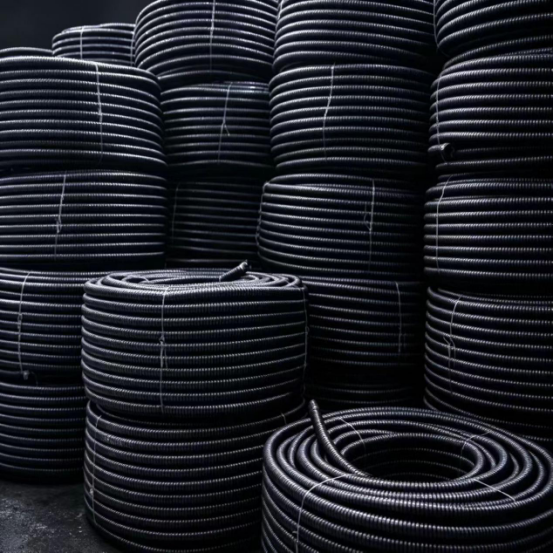
Carbon pipe
- Product details
- Contact us
Product Introduction
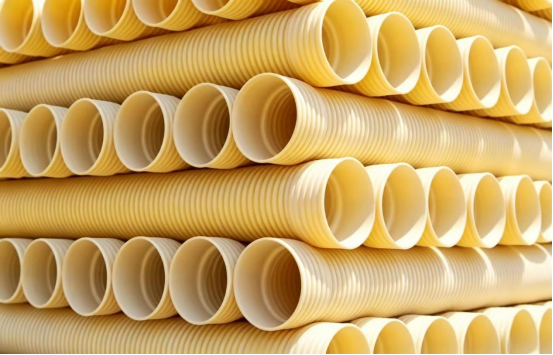
Carbon-reinforced conduits—often referred to as carbon-threaded conduits, carbon-corrugated conduits, single-wall carbon conduits, or PE carbon conduits—are cable protection pipes manufactured from high-density polyethylene (HDPE) and modified carbon-based materials using extrusion and spiral-winding processes. They typically feature a black, spirally corrugated exterior, a relatively smooth interior, and often come pre-equipped with an internal steel pull-wire. These conduits are primarily used for the underground routing and protection of power, telecommunications, street lighting, and traffic-related cables. Their most distinctive characteristics include a black, single-wall, spirally corrugated exterior paired with a smooth interior; they are supplied in coils and feature a single-bore design—distinct from "multi-bore" (plum-blossom style) conduits.
Product Features
1. Excellent flexibility and obstacle-navigation capability: Due to their spiral-threaded structure, these conduits are highly flexible and can be bent to navigate around underground obstacles. Typically, they offer a bending radius of approximately 10–15 times the pipe diameter, making them well-suited for complex terrain or environments requiring frequent directional changes.
2. High compressive strength: Despite being made of plastic, the spiral-corrugated structure provides robust compressive resistance.
Common ring stiffness ratings include values ≥18.0 kN/m² (with some products rated between SN8 and SN16), making them suitable for underground burial and capable of withstanding soil pressure and surface loads.
3. Corrosion resistance and long service life: These conduits exhibit strong resistance to acids, alkalis, and salts, and are not prone to rust or corrosion. Compared to steel, cast iron, or concrete pipes, they are better suited for use in damp, saline-alkali, or otherwise corrosive underground environments. Under normal operating conditions, they typically offer a service life of over 50 years. 4. Lightweight and easy to handle and install; carbon-reinforced conduits are lighter than cement, cast iron, steel, or standard fixed-length PVC pipes, making them easier to transport. Furthermore, their long individual lengths reduce the number of joints required, thereby increasing construction efficiency.
5. Convenient cable pulling; the inner walls of these conduits are smooth with a low coefficient of friction, resulting in minimal resistance when pulling cables through. Most products come with a pre-installed steel guide wire, allowing for the direct pulling of electrical or fiber-optic cables, which significantly enhances installation efficiency.
6. Long individual lengths and fewer joints; these conduits are typically supplied in coils, with lengths reaching tens or even hundreds of meters per coil (commonly 40–200 meters, depending on the specific product and manufacturer). Fewer joints mean faster installation, a reduced risk of water or mud ingress, and easier long-term maintenance.
7. Excellent electrical insulation; designed as protective conduits for cables, these pipes offer superior insulating properties. Typical electrical specifications include an insulation resistance of ≥100 MΩ and the ability to withstand 2000V for 15 minutes without breakdown, making them suitable for protecting power cables, communication cables, street lighting circuits, and more.
Applicable Standard
GB/T 13381.1-92
Common Specifications
Φ50, Φ65, Φ80, Φ100, Φ125, Φ150, Φ175, Φ200
Scope of Application
Carbon-reinforced conduits are primarily used for the protection of underground cables. Common applications include:
Underground infrastructure for urban street lighting
Underground cabling for residential developments
Urban power grid renovation projects
Construction and upgrading of power and communication infrastructure for expressways
Laying of power and communication cables for electrified railways
Cable protection for electrical substations
Protection for fiber-optic communication cables
Underground cabling for parks, public squares, and large-scale venues
Protection for power cables rated at 10 kV or below
They are frequently used as alternatives to—or in conjunction with—traditional cement, cast iron, steel, or PVC pipes.
Wuhan Tongzhu Pipeline Technology Development Co., Ltd.
WhatsApp:18971678318
Email:525444153@qq.com
Address:Room 2108, Juhao Huating, No. 460 Wuluo Road, Wuchang District, Wuhan
QQ:525444153
Website:www.tongzhupipe.com